
Restoring the
Water Tower.
“Securing the hydrological future of 5 million people through the restoration of the Rwenzori Mountains Ecosystem.”
The Vanishing Ice &
The Crisis Below.
The Rwenzori Mountains, Africa’s “Mountains of the Moon,” are facing an existential crisis. Historical records indicate glacial cover has shrunk from 15 km² in 1900 to less than 1.5 km² today. This is not merely an aesthetic loss; it is a hydrological emergency.
As the “Water Tower” for over 5 million people in the Nile Basin, the degradation of this ecosystem triggers flash floods, soil erosion, and agricultural collapse. At Rwenzori Hantravel Safaris, we refuse to be passive observers. We have launched a comprehensive, multi-dimensional strategy to reverse this decline.
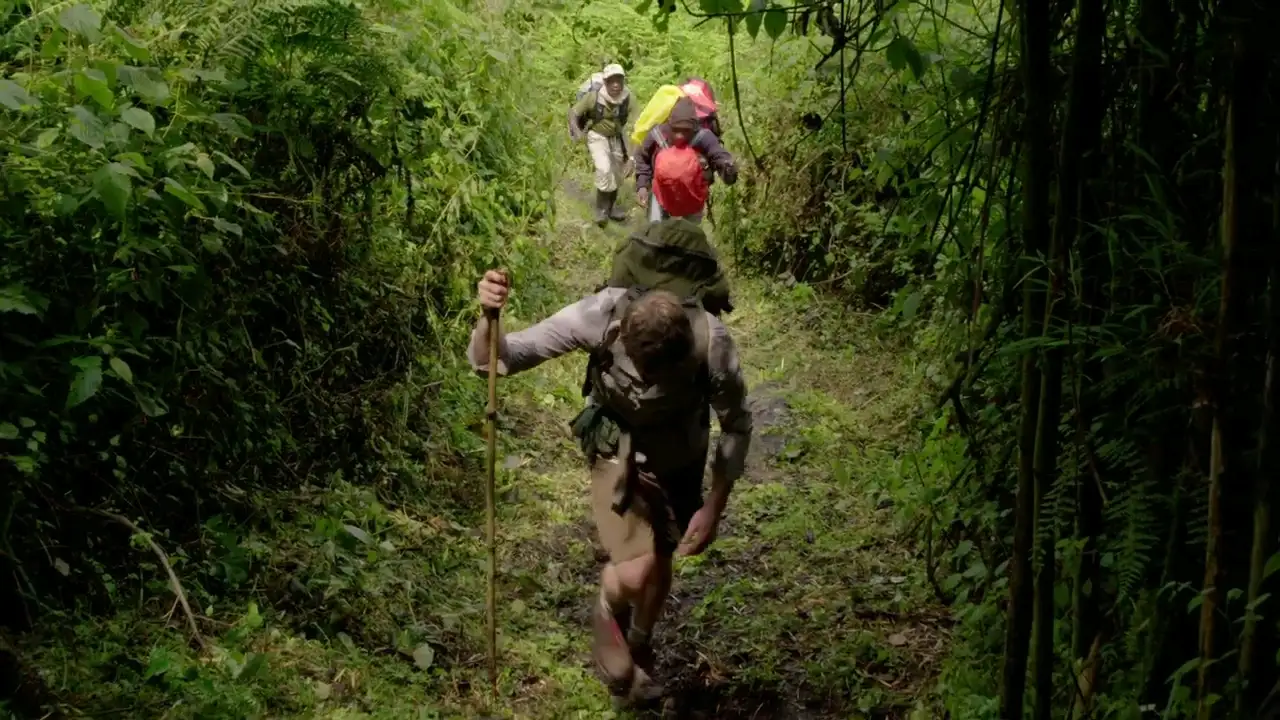
Climb with Purpose
Every expedition funds our restoration mandate.
A Multi-Dimensional Approach
Riparian Restoration
Stabilizing 100 km of riverbanks using bamboo bio-engineering. Bamboo’s rhizome systems create a living wall against flash floods in the Mubuku valley.
- • Highland Bamboo (Oldeania alpina)
- • Flood Mitigation
Afro-Montane Forest
Restoring 1,000 hectares of degraded buffer zone with indigenous species like Hagenia abyssinica to sequester carbon and restore critical habitat.
- • Community Nurseries
- • Indigenous Species Only
Sustainable Livelihoods
Reducing pressure on the park through Apiculture (Beekeeping). Distributing 1,050 hives to coffee farmers to boost pollination and income.
- • 250% Coffee Yield Increase
- • Alternative Income Streams
Green Infrastructure
Constructing sustainable boardwalks in sensitive high-altitude bogs (Bigo Bog) to prevent trampling of fragile Afro-alpine flora.
- • Wetland Protection
- • Low-Impact Tourism
The Kithasamba Heritage Program
Effective conservation must be rooted in the values of the local community. For the Bakonzo people, the glaciers (Nzururu) are the spiritual home of Kithasamba. Their disappearance is not just an environmental crisis, but a cultural rupture.
Our program integrates ancestral stewardship with modern climate science. We are launching “Plant-for-the-Planet” academies to train youth as climate catalysts, ensuring the next generation sees the mountain not as a resource to exploit, but as a heritage to protect.
High-Tech Ecological Monitoring
We are closing the data gap on glacial recession and biodiversity loss. Using a participatory “Citizen Scientist” model, our guides are trained to use drones for high-resolution photogrammetry of the Mount Stanley ice field.
This initiative establishes a real-time monitoring database for threatened species like the Rwenzori leopard and red duiker. By sharing this data with UWA and research partners, we enable adaptive management strategies that respond rapidly to the changing climate.
Projected Impact (Phase I: 36 Months)
Phase 1 in progress (Mubuku Valley)
“Our funding model prioritizes direct ecosystem intervention. Over 70% of funds go directly to field activities including reforestation, infrastructure, and river management.”
The Kithasamba Strategy
Read the full technical proposal outlining our 48-month framework for climate adaptation, budget allocation, and monitoring methodology.
DOWNLOAD FULL PDFJoin the Restoration
We are actively seeking partners, donors, and researchers to join this initiative. Whether you represent an NGO, a University, or a CSR department, your support directly impacts the Rwenzori ecosystem.