
rwenzori hantravel safaris
RWENZORI COLOBUS
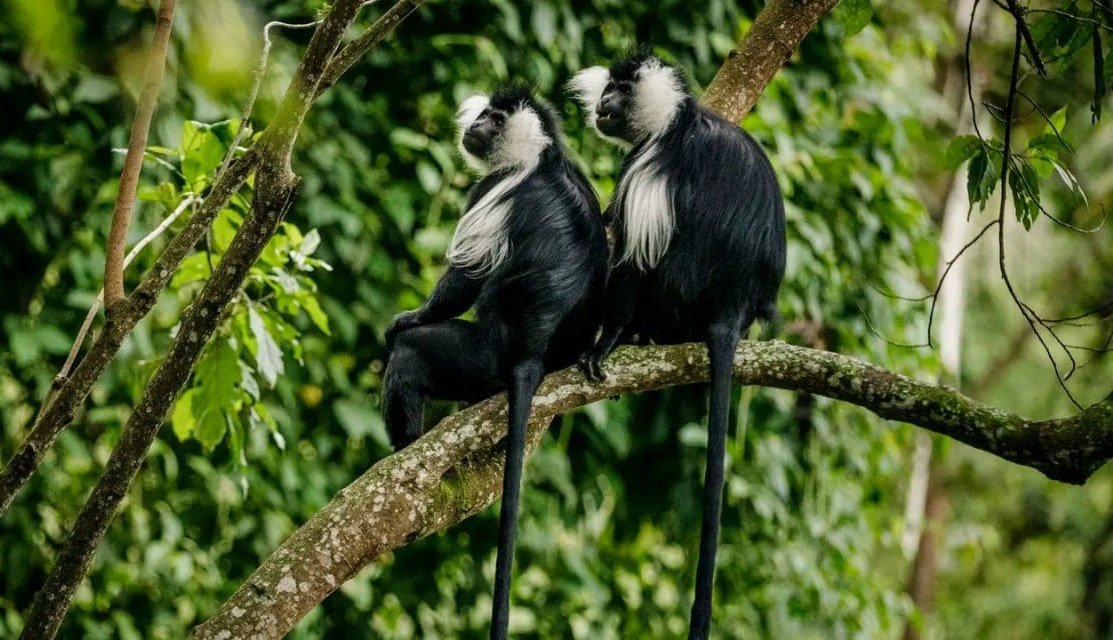
As you begin your ascent into the lower forests of the Rwenzori Mountains, the dense canopy quickly comes alive with the acrobatic displays of the Rwenzori Colobus Monkey (Colobus angolensis ruwenzorii). This distinct, highly social primate is a unique subspecies endemic to the Albertine Rift. For trekkers and wildlife photographers, watching their long, snowy-white tails trail behind them as they make massive leaps between giant mahogany trees is one of the most magical early wildlife encounters of the safari.
Quick Facts
Appearance & Evolution
Iconic Black and White Coat
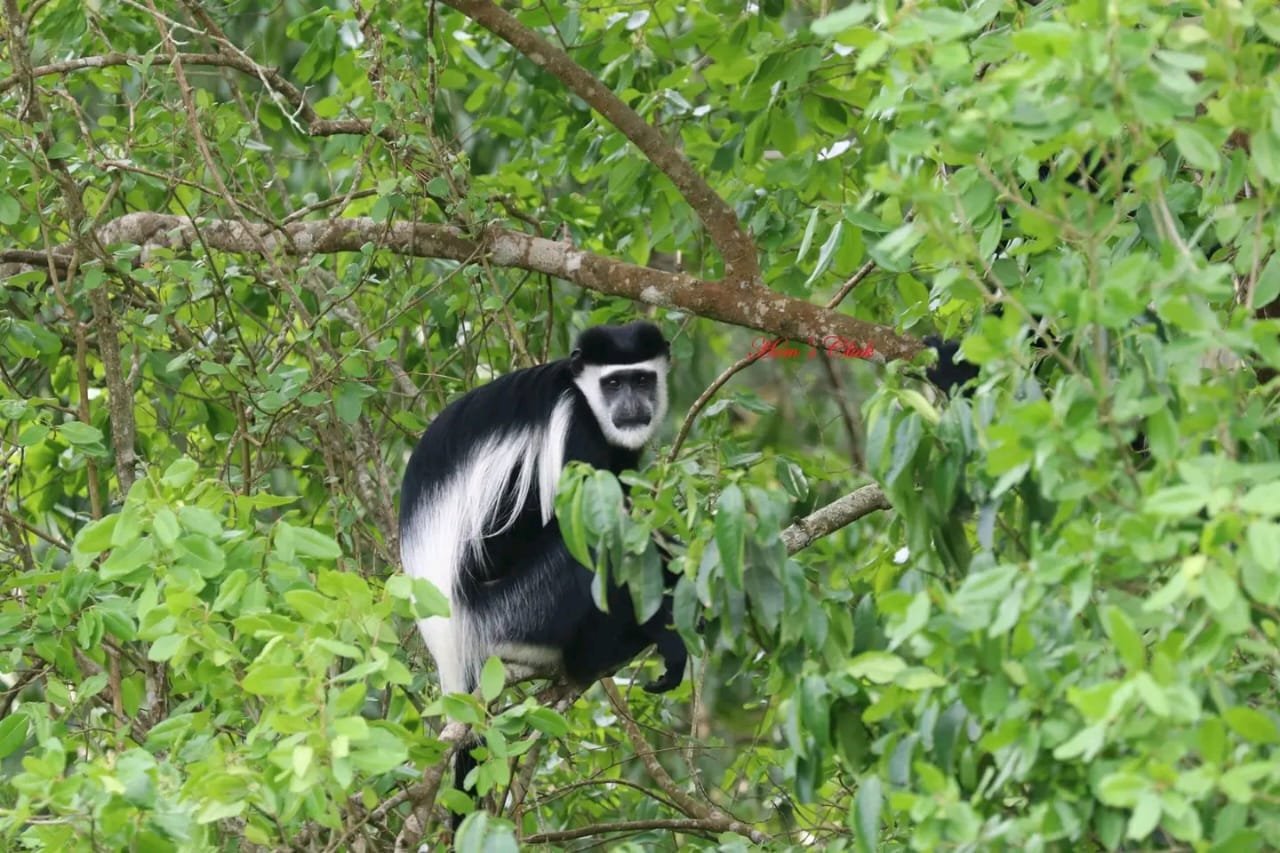
They feature a jet-black body sharply contrasted by a striking mantle of long, silky white hair that frames their faces and flows over their shoulders.
The “Parachute” Tail
They are famous for their dramatic, bushy white tails. They use this tail as a counterbalance and an aerodynamic rudder when making incredible, gravity-defying leaps.
The Missing Thumb
The word “colobus” originates from a Greek word meaning “mutilated” or “cut short.” This refers to their lack of a functional thumb—a brilliant evolutionary adaptation.
Habitat & Behavior
High Canopy Dwellers
They are almost strictly arboreal, meaning they rarely venture down to the forest floor. You will easily spot them foraging in the upper canopies.
Specialized Detoxifying Stomachs
Unlike monkeys that eat mostly fruit, the colobus monkey eats tough, mature mountain leaves. They have evolved a complex, multi-chambered stomach—much like a cow’s—that allows them to safely consume leaves that would be highly toxic to other species.