
Why the Rwenzori Mountains Offer a Far Superior Trekking Experience to Kilimanjaro and Mount Kenya
Forget the crowded tourist trails. Discover why Africa’s secret “Mountains of the Moon” provide the ultimate, untouched alpine expedition.
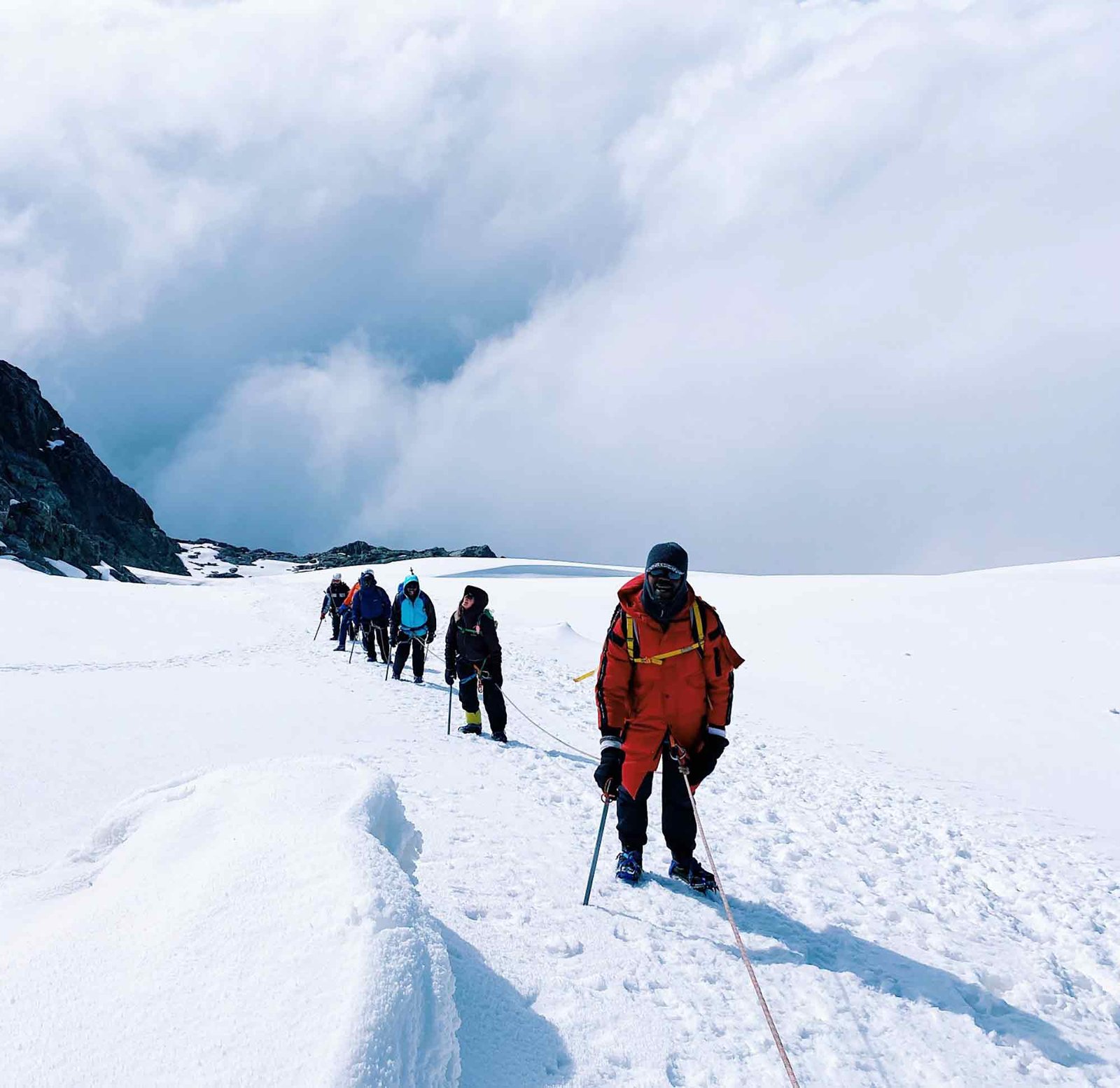
The jagged, glaciated peaks of Mount Stanley in the Rwenzori Range.
When adventurers dream of climbing in Africa, Mount Kilimanjaro and Mount Kenya are usually the first names that come to mind. Kilimanjaro holds the prestigious title of being the highest peak on the continent. Mount Kenya offers a dramatic, rocky summit. However, for those seeking a true, untamed wilderness expedition, the Rwenzori Mountains in Uganda completely outclass their famous eastern neighbors.
Known historically as the “Mountains of the Moon,” the Rwenzori range is a UNESCO World Heritage site that offers an experience unlike anywhere else on Earth. From breathtaking biodiversity to true mountaineering challenges, here is exactly why the Rwenzoris are the ultimate choice for serious trekkers.
1. The Wilderness Factor: Absolute Solitude
The biggest drawback of Mount Kilimanjaro is its immense popularity. Over 35,000 tourists attempt to summit Kilimanjaro every single year. The primary routes, such as the Machame and Marangu paths, are heavily congested. You will frequently find yourself walking in a continuous, single-file line of hikers. The campsites are crowded, noisy, and often suffer from the environmental strain of mass tourism.
In stark contrast, the Rwenzori Mountains see only a tiny fraction of that traffic. Trekking the Central Circuit or the Kilembe Trail feels like a genuine, pioneer expedition. You can hike for days without seeing another group of tourists. If your goal is to disconnect from the modern world and immerse yourself completely in nature, the absolute solitude provided by the Rwenzoris is unmatched in East Africa.
“While Kilimanjaro feels like a crowded tourist highway, the Rwenzoris make you feel like an early explorer discovering an untouched world for the very first time.”
2. Block Mountains vs. Dormant Volcanoes
The geological origins of these mountains dictate the entire trekking experience. Both Kilimanjaro and Mount Kenya are freestanding, dormant volcanoes. Because of this, their upper slopes are composed largely of loose volcanic scree and barren rock. The higher you climb on Kilimanjaro, the more desolate and lifeless the landscape becomes.
The Rwenzoris are completely different. They are a “block mountain” range created by the tectonic uplifting of the Albertine Rift. Because they are a sprawling mountain range rather than a single volcanic cone, they trap immense amounts of moisture from the Congo Basin. This unique geography creates a lush, deeply layered environment consisting of misty river valleys, high-altitude bogs, and jagged rock towers wrapped in permanent glaciers.
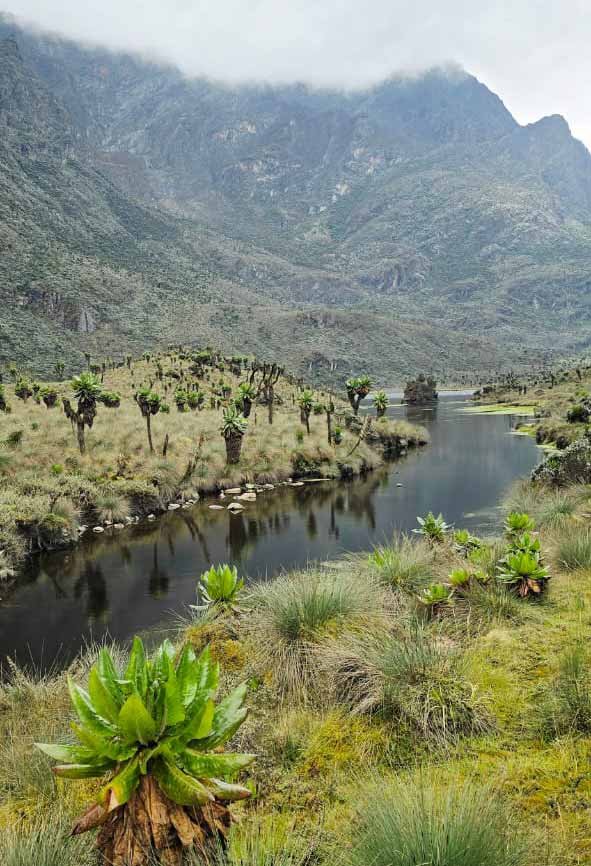
The prehistoric-looking Giant groundsels and Lobelia plants are unique to the Afro-alpine zones.
3. Unrivaled Afro-Alpine Biodiversity
If you are a nature lover, the choice is incredibly simple. Kilimanjaro offers varying climate zones, but the wildlife and flora thin out rapidly after the initial rainforest layer.
The Rwenzoris are bursting with life at almost every altitude. The lower trails wind through dense montane forests heavily populated by chimpanzees, Rwenzori colobus monkeys, and the elusive three-horned chameleon. As you push higher into the Afro-alpine zone above 3,500 meters, the landscape transforms into a bizarre, prehistoric garden. Towering Giant Lobelias and massive Giant Groundsels dominate the misty valleys. It is a botanical wonderland that simply does not exist on the slopes of Kilimanjaro.
4. True Technical Mountaineering
Kilimanjaro is famously known as a “walk-up” mountain. You can reach the summit of Uhuru Peak without ever needing ropes, crampons, or technical climbing skills. While the altitude is punishing, the physical act of climbing is simply a long, steep hike.
Reaching Margherita Peak (5,109 meters) in the Rwenzoris requires genuine mountaineering. To stand on the highest point of Mount Stanley, climbers must navigate complex glacier systems, cross deep crevasses using aluminum ladders, and use ice axes and fixed ropes to ascend steep ice walls. The feeling of accomplishment upon summiting Margherita Peak is profound because it requires physical endurance, specialized gear, and technical skill.
5. At a Glance: Head-to-Head Comparison
| Feature | Rwenzori Mountains | Mount Kilimanjaro | Mount Kenya |
|---|---|---|---|
| Highest Peak | Margherita Peak (5,109m) | Uhuru Peak (5,895m) | Batian Peak (5,199m) |
| Tourist Traffic | Very Low (True wilderness) | Extremely High (Crowded) | Moderate |
| Climbing Style | Glacier traverse, rope climbing | Non-technical walking trail | Technical rock climbing |
| Landscape Type | Block mountain range, lush bogs | Dormant volcano, barren scree | Dormant volcano, rocky |
| Flora & Fauna | Exceptional (Endemic species) | Minimal at high altitudes | Good, but less diverse |
Ready to Experience the Mountains of the Moon?
Leave the crowded trails of Kilimanjaro behind. Join Rwenzori Hantravel Safaris for an authentic, untamed expedition into the heart of Africa.
Contact Us